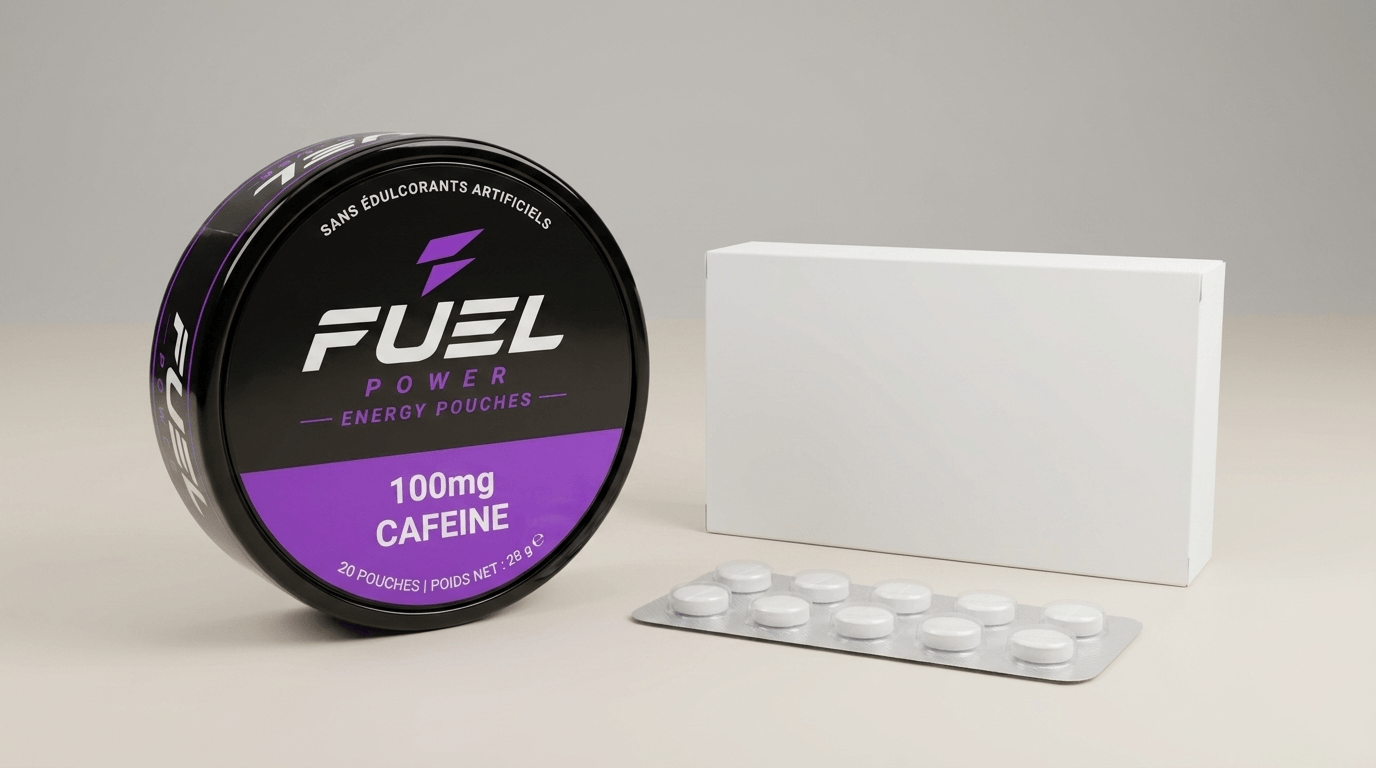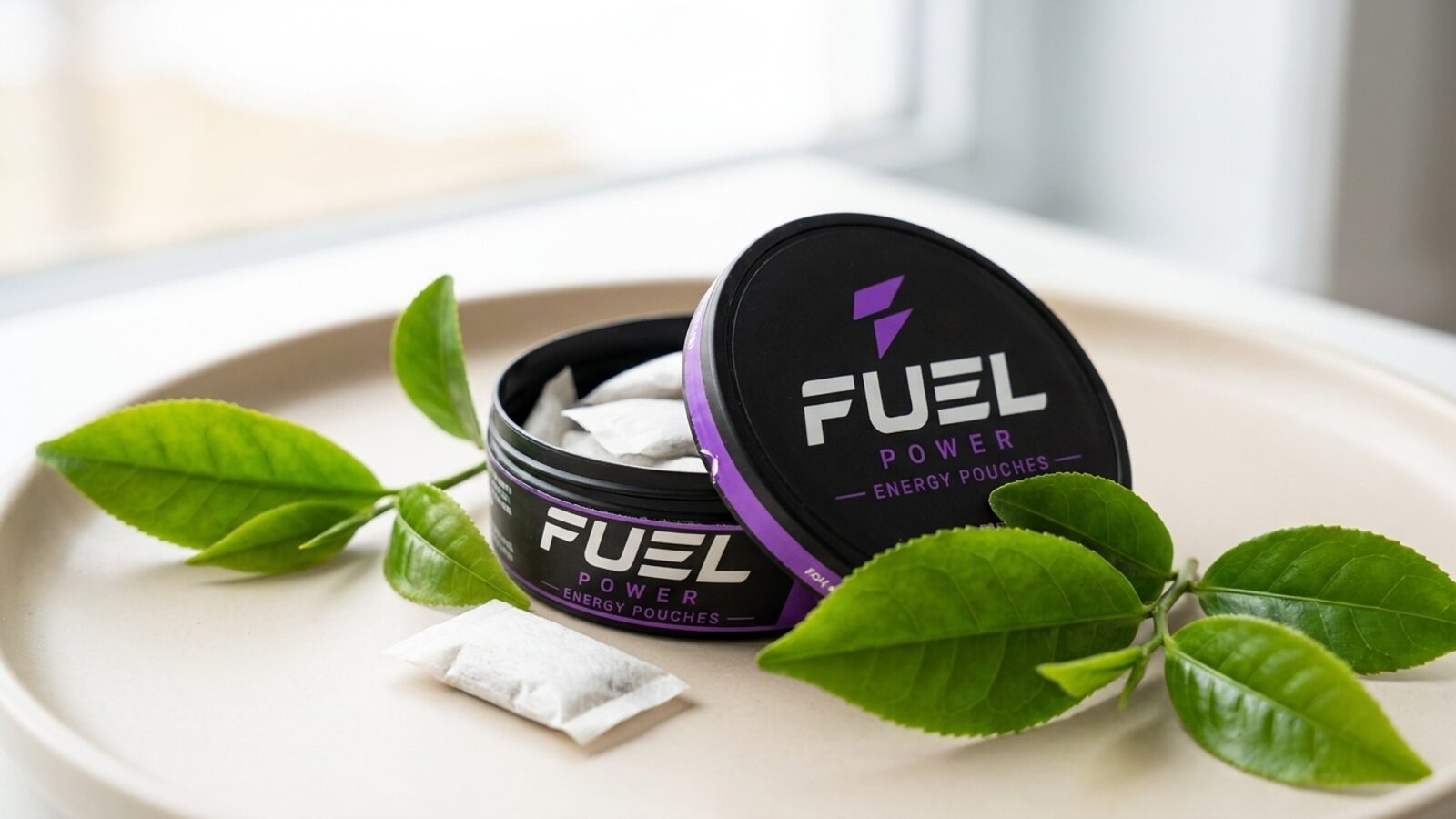
100mg of caffeine is the exact dose in a FUEL POWER pouch. But what does that actually change when it comes to focus? Between what the research shows, what's still debated, and what each person feels differently, here's an honest explanation, without overselling it.
1. What caffeine does to attention
The basic mechanism: less perceived fatigue, more alertness
Caffeine blocks adenosine receptors in the brain, the molecule responsible for the feeling of fatigue that builds up over the course of the day. By blocking that signal, it restores a feeling of alertness. This is a solid, well-documented mechanism. For the full detail on this mechanism, see our article on how caffeine acts on your body.
Alertness isn't always the same as improved focus
It's important to distinguish two things: feeling more alert, and being objectively more focused on a specific task. Caffeine clearly acts on the first. On the second, the effect is more nuanced: the scientific literature shows benefits mostly in people who are fatigued or sleep-deprived, with caffeine compensating for an attention deficit rather than improving attention that's already optimal.

2. What's less often said: the limits of caffeine alone
No magic effect on memory or creativity
Caffeine supports alertness and reaction time, but the evidence is much weaker for a direct effect on long-term memory or creativity. It's worth staying cautious about marketing shortcuts on this topic.
The question of jitteriness
Without another active to moderate its effects, caffeine alone can, in some more sensitive people, come with a feeling of jitteriness or overstimulation, especially at a higher dose or when combined with other caffeine sources close together in time. This is worth knowing honestly: 100mg is a notable dose, and people react to it differently. It's not systematic, but it's not to be ruled out either. If you want to assess your own sensitivity, check out our dedicated article on caffeine sensitivity.
3. Why context matters as much as the dose
Sleep, hydration, the task at hand
How much caffeine's effect on focus is actually felt depends heavily on context: a lack of sleep the night before, dehydration, or a particularly demanding task can all influence the result, independent of the dose taken.
Individual tolerance
Someone who consumes caffeine daily develops a gradual tolerance, which can reduce the felt effect on alertness over time.
4. How to get the most out of a pouch before a demanding task
- Use it ahead of a moment that requires focus, rather than in reaction to fatigue that's already set in.
- Stay attentive to your own sensitivity, especially with a 100mg dose per pouch.
- Avoid stacking multiple caffeine sources close together in time.
- Don't expect a "magic" effect on tasks that mainly call for rest or recovery.
Summary table: caffeine and focus, what the science says
| Effect | What the science says |
|---|---|
| Alertness | Well-documented effect, via adenosine blocking |
| Focus on a specific task | Benefit mostly in cases of pre-existing fatigue |
| Memory / creativity | Weak evidence, not to be overestimated |
| Possible jitteriness | Occurs in some sensitive people, with no moderator in the formula |
| Tolerance | Builds up with regular consumption |
Caffeine remains one of the best-documented stimulants for supporting alertness, especially in cases of fatigue. But it's nothing like a magic shortcut to perfect focus, and at 100mg per pouch, with no other active to moderate its effects, it remains important to listen to your own sensitivity, particularly when it comes to jitteriness.
FAQ
Is 100mg of caffeine enough to improve my focus? It mostly depends on your starting state: the effect is clearer if you're starting from a state of fatigue than if you're already well rested.
Can a FUEL POWER pouch make you jittery? It's possible for people sensitive to caffeine, especially at 100mg or when combined with other caffeine sources during the day.
Does caffeine improve memory? The scientific evidence on this is weak. Its best-established effect concerns alertness, not long-term memory.
Why do I feel less effect from caffeine over time? That's a tolerance effect that builds up with regular, daily consumption.
What's the best time to use a pouch before a demanding task? Ahead of a planned period of focus, rather than in reaction to fatigue that's already set in.
Can caffeine alone replace a good night's sleep? No. It temporarily masks the feeling of fatigue, but it doesn't replace the real benefits of sleep for cognitive recovery.
Curious to try a precise dose of caffeine before your next work or training session? Discover the 6 FUEL POWER flavors.